Uranium in drinking water is a serious concern for many communities. This naturally occurring element can seep into groundwater from rocks and soil.
It poses health risks when consumed over time.
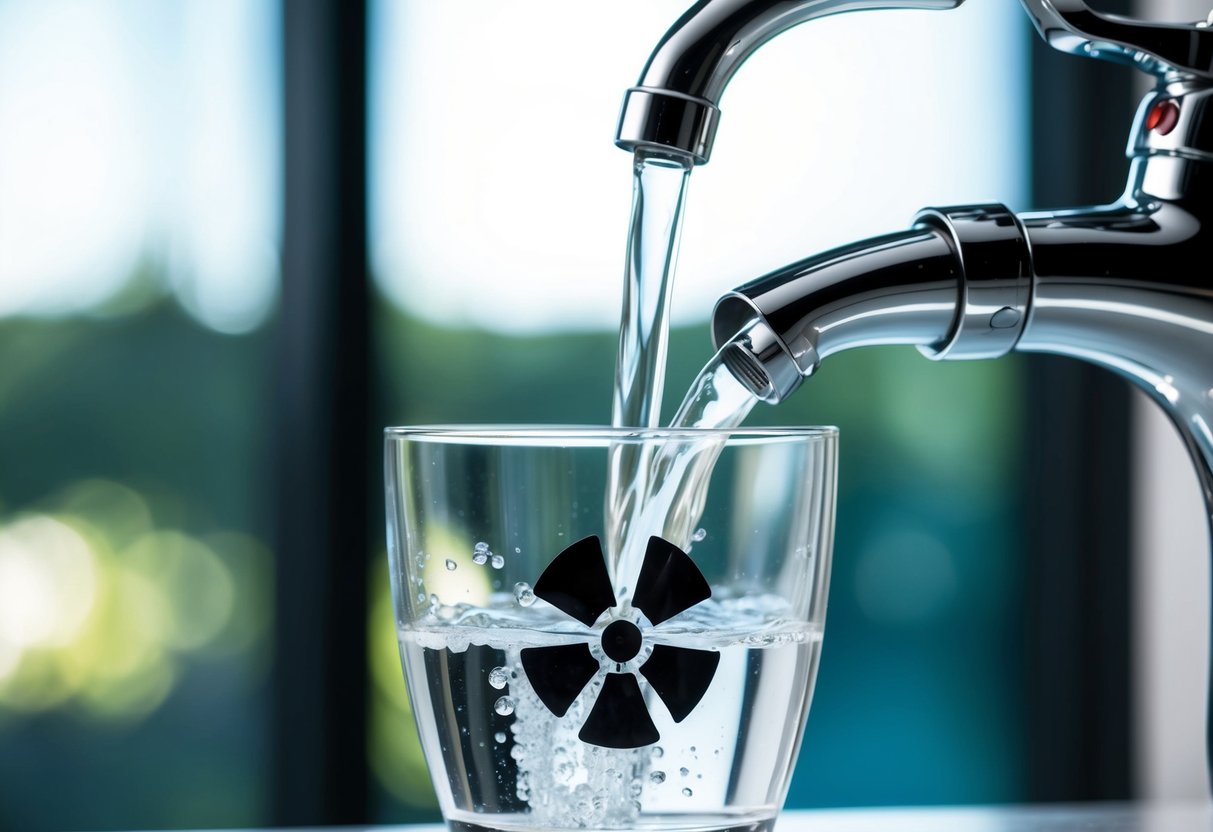
Exposure to uranium through drinking water can lead to kidney damage and increased cancer risk. Testing is crucial to know if your water contains unsafe levels.
Many people are unaware their tap water may contain this radioactive metal.
Water treatment methods exist to remove uranium from drinking supplies. Public water systems must follow regulations to keep levels below set limits.
Private well owners should test their water regularly for uranium and other contaminants.
Key Takeaways
- Uranium in drinking water comes from natural sources and can harm health
- Water testing is important to detect unsafe uranium levels
- Treatment options and regulations help protect public drinking water
Fundamentals of Uranium
Uranium is a radioactive element with unique chemical properties. It occurs naturally in various sources and has important implications for drinking water safety.
Chemical Properties of Uranium
Uranium is a silvery-white metal with atomic number 92. It has three main isotopes: U-238, U-235, and U-234.
In water, uranium forms the uranyl ion (UO2²⁺).
The uranyl ion is highly soluble and mobile in water. This makes it easy for uranium to spread in aquatic environments.
Uranium can exist in several oxidation states, but +6 is most common in natural waters. This affects its behavior and interactions with other substances.
Uranium Sources and Occurrence
Uranium is found in rocks, soil, and water. It’s the 48th most abundant element in Earth’s crust.
Natural processes like rock weathering release uranium into groundwater. Human activities such as mining and nuclear fuel production can also introduce uranium into water sources.
Uranium levels in drinking water vary widely. They depend on local geology and human activities. Some areas have naturally high uranium concentrations in groundwater.
Radioactivity of Uranium
Uranium is a radionuclide, meaning it undergoes radioactive decay. This process releases energy and produces other radioactive elements.
The half-life of U-238, the most common isotope, is 4.5 billion years. U-235 has a half-life of 704 million years.
Uranium’s radioactivity poses health risks when ingested. It can damage DNA and increase cancer risk. The kidneys are particularly sensitive to uranium exposure.
Measuring uranium’s radioactivity is crucial for assessing drinking water safety. Alpha particle emissions are the main concern for uranium in water.
Uranium in Water Sources
Uranium can enter drinking water through various natural and human-made processes. Its presence in water sources poses potential health risks to humans and ecosystems.
Groundwater Contamination with Uranium
Uranium often occurs naturally in groundwater due to its presence in surrounding rock formations. As water flows through uranium-rich rocks and soils, it can dissolve and carry uranium particles.
The amount of uranium in groundwater varies widely depending on local geology.
Some areas have higher concentrations of uranium in groundwater than others. This variation is linked to the types of rocks and minerals present underground. Granite and other igneous rocks tend to contain more uranium than sedimentary rocks.
Factors affecting uranium levels in groundwater include:
- pH levels of the water
- Oxygen content
- Presence of other minerals
- Water flow rates
The Impact of Fertilizers on Uranium Levels
Phosphate fertilizers can contribute to increased uranium levels in water sources. These fertilizers often contain trace amounts of uranium as a natural contaminant. When applied to crops, the uranium can leach into groundwater or run off into surface waters.
The use of phosphate fertilizers has led to concerns about:
- Long-term accumulation of uranium in agricultural soils
- Potential contamination of nearby water sources
- Uptake of uranium by food crops
Studies have shown that areas with heavy phosphate fertilizer use may have elevated uranium concentrations in drinking water supplies. This highlights the need for careful management of fertilizer application to protect water resources.
Uranium Mining and Water Supply Contamination
Uranium mining activities can significantly impact local water supplies. The mining process exposes uranium-containing rocks and creates waste materials that can contaminate nearby water sources.
Key issues related to uranium mining and water contamination include:
- Acid mine drainage
- Tailings pond leakage
- Dust from mining operations
These issues can lead to increased uranium levels in both surface water and groundwater near mining sites. Communities located close to uranium mines may face higher risks of water contamination.
Proper management and treatment of mine waste are essential to minimize the impact on water resources. Ongoing monitoring of water quality around mining areas is crucial to protect public health and the environment.
Health Concerns of Uranium in Drinking Water
Uranium in drinking water can pose serious risks to human health. It affects multiple organs and systems in the body, with the kidneys being especially vulnerable.
Short-Term and Chronic Health Effects
Drinking water with high uranium levels can cause both immediate and long-term health problems. Short-term effects may include nausea, vomiting, and diarrhea. These symptoms often appear quickly after consuming contaminated water.
Long-term exposure to uranium can lead to more severe issues. It may cause damage to bones and liver. Uranium can also harm the reproductive system and increase cancer risk.
Children are more sensitive to uranium’s toxic effects. Their developing bodies absorb and retain more of the element than adults do.
Kidney Disease and Other Renal Effects
The kidneys are the main target of uranium toxicity. Chronic exposure can cause kidney inflammation and reduced function. In severe cases, it may lead to kidney failure.
Uranium affects the kidneys’ ability to filter waste from the blood. This can result in protein and glucose appearing in urine. Other kidney effects include:
- Increased urine volume
- Changes in urine acidity
- Damage to kidney tubules
Even low levels of uranium exposure over time can harm kidney health. The effects may not be immediately noticeable but can worsen with continued exposure.
Assessing the Toxicity of Uranium Exposure
Scientists use various methods to evaluate uranium’s health impacts. They look at both chemical toxicity and radiation effects.
Chemical toxicity is the main concern for uranium in drinking water. Researchers study:
- Uranium concentration in water
- Daily intake amounts
- Length of exposure
- Individual factors like age and health status
Blood and urine tests can measure uranium levels in the body. Kidney function tests help assess potential damage.
Risk assessments consider different exposure scenarios. They aim to set safe limits for uranium in drinking water. Current guidelines vary between countries, reflecting ongoing research and debate about safe levels.
Regulation and Safety Measures
Governments have set rules to keep drinking water safe from uranium. These rules aim to protect people’s health and the environment. They cover testing, limits, and fixing contaminated water.
Public Drinking Water Standards
The Safe Drinking Water Act sets standards for public water systems in the U.S. It requires regular testing for uranium and other harmful substances. Water providers must tell customers about test results.
If uranium levels are too high, water systems must take action. This can include treating the water or finding new water sources. The Environmental Protection Agency (EPA) oversees these rules.
Many other countries have similar laws. They work to make sure tap water is safe to drink.
Maximum Contaminant Level for Uranium
The EPA has set a maximum contaminant level (MCL) for uranium in drinking water. This level is 30 micrograms per liter (μg/L).
Water providers must keep uranium below this level. If it goes above, they must fix the problem quickly. The MCL aims to balance health risks and the cost of treatment.
Some experts think the MCL should be lower. They worry about long-term health effects from low-level exposure.
Environmental Justice and Uranium Contamination
Uranium in water often affects some groups more than others. Poor and rural areas may lack resources to test and treat their water. This can lead to higher exposure risks.
Native American lands have been hit hard by uranium mining. This has left many water sources contaminated. Fixing these problems is costly and complex.
Efforts are growing to address these unfair impacts. Some focus on cleaning up old mines. Others work to bring safe water to affected communities.
Treatment and Remediation
Removing uranium from drinking water requires specialized methods. These techniques range from conventional water treatment to advanced technologies and site remediation approaches.
Conventional Water Treatment Methods
Standard water treatment processes can remove some uranium, but they’re not always effective enough. Pump-and-treat technologies are common for uranium removal. This method pumps contaminated water to the surface for treatment.
Filtration is another basic technique. It uses special filters to catch uranium particles. However, filtration alone often can’t meet strict drinking water standards.
Coagulation and flocculation can also help. These processes make uranium clump together so it’s easier to remove. But they may not work well for all types of uranium contamination.
Ion Exchange and Other Advanced Techniques
Ion exchange is a highly effective method for uranium removal. It works by swapping uranium ions with harmless ions. This technique can clean water to meet strict safety standards.
Nanofiltration membranes are another advanced option. They can filter out very small uranium particles from water.
Reverse osmosis is also powerful. It forces water through a thin membrane, leaving uranium behind. This method works well for both drinking water and seawater.
Remediation of Uranium-Contaminated Sites
Cleaning up uranium-contaminated areas is complex. It often involves more than just water treatment.
Phytoremediation uses plants to remove uranium from soil and water. Sunflowers, for example, can absorb large amounts of uranium through their roots.
In-situ remediation treats uranium without removing contaminated material. This can involve adding chemicals to the ground to make uranium less harmful or mobile.
Ex-situ methods involve digging up contaminated soil or pumping out water for treatment elsewhere. This can be more disruptive but sometimes necessary for severe contamination.
Understanding Water Quality
Water quality affects uranium levels in drinking supplies. Testing methods, chemical properties, and environmental factors all play important roles.
Proper analysis helps identify contamination risks.
Measurement and Analysis of Uranium in Water
Uranium levels in water are measured using specialized techniques. Common methods include mass spectrometry and alpha spectroscopy.
These tests can detect very small amounts of uranium.
Labs analyze water samples for total uranium content. They also look at different uranium isotopes.
Results are usually reported in micrograms per liter (μg/L).
Regular testing is key for safe drinking water. Many countries have set limits for uranium in water supplies. The World Health Organization guideline is 30 μg/L.
Solubility and Mobility of Uranium Compounds
Uranium’s solubility affects how it moves in water. Some uranium compounds dissolve easily. Others are less soluble.
Oxidation state impacts solubility. Uranium(VI) forms are often more soluble than uranium(IV). pH levels also play a big role.
In acidic conditions, uranium tends to be more soluble.
Water chemistry influences uranium mobility. Things like carbonate levels can increase uranium’s ability to travel in groundwater. This can lead to wider spread contamination.
Impact of Soil Properties on Uranium Migration
Soil type affects how uranium moves underground. Clay soils can trap uranium particles. Sandy soils allow faster movement.
Organic matter in soil can bind to uranium. This may slow its migration. But it can also form soluble complexes that increase mobility.
Soil pH influences uranium behavior. Acidic soils often lead to more uranium in groundwater. Alkaline conditions can cause uranium to stick to soil particles.
Other soil minerals impact uranium movement too. Iron and manganese oxides can adsorb uranium. This reduces how much enters water supplies.
Related Elements and Isotopes
Uranium is not the only element of concern in drinking water. Other radioactive elements and heavy metals can also be present, posing potential health risks.
Comparing Uranium with Other Radionuclides
Uranium is one of several radionuclides that can be found in drinking water. Common radionuclides include radium, radon, and thorium. These elements emit ionizing radiation as they decay.
Uranium primarily emits alpha particles, which are less penetrating than gamma rays from other radionuclides. However, uranium’s chemical toxicity is often of greater concern than its radioactivity in drinking water.
The health effects of different radionuclides vary. Radium, for example, tends to accumulate in bones and can increase cancer risk. Radon gas can cause lung issues if inhaled from water vapor.
Presence of Arsenic and Thorium
Arsenic and thorium are two other elements that may occur alongside uranium in drinking water. Arsenic is a toxic metalloid that can cause serious health problems even at low levels.
Thorium is a radioactive element similar to uranium. It’s generally less common in drinking water but can still pose risks. Thorium exposure has been linked to increased cancer risk, particularly in the lungs and liver.
Water sources with elevated uranium levels may also contain higher amounts of arsenic or thorium due to similar geological origins. Testing for multiple contaminants is important for assessing overall water quality and potential health impacts.
Risk Assessment and Management
Uranium in drinking water poses health risks that require careful evaluation and mitigation. Identifying affected areas and implementing protective measures are key to safeguarding public health.
Identifying High-Risk Regions
Groundwater uranium concentrations vary widely by location. Geological factors play a big role in determining risk levels. Areas with uranium-rich bedrock tend to have higher concentrations in water supplies.
The Navajo Nation faces significant uranium contamination issues. Many wells and springs on Navajo lands contain unsafe uranium levels due to past mining activities.
Regular water testing is crucial for finding problem areas. Public health agencies conduct surveys to map uranium “hot spots” where levels exceed safety standards.
GIS mapping helps visualize contamination patterns. This guides further testing and remediation efforts in high-risk zones.
Strategies for Public Health Protection
Water treatment methods can remove uranium from drinking supplies. Reverse osmosis and ion exchange systems are effective options for both public and private wells.
Public education is vital. People need to understand uranium risks and testing options. Health agencies provide guidance on safe water sources and home treatment systems.
Alternative water supplies may be needed in severely affected areas. This can include piping in clean water or providing bottled water.
Stricter regulations on uranium in drinking water help protect public health. The EPA sets maximum contaminant levels that water systems must meet.
Long-term monitoring tracks uranium levels over time. This helps assess the effectiveness of mitigation efforts and identifies new problem areas.
Frequently Asked Questions
Uranium in drinking water poses health risks and occurs through natural and human-made processes. Testing, treatment methods, and regulations aim to protect public health from this contaminant.
What are the potential health effects of uranium in drinking water?
Uranium in drinking water can harm kidney function. Long-term exposure may increase cancer risk. Studies show chronic consumption affects renal health.
High levels can cause bone toxicity. Children are more vulnerable to uranium’s effects.
How can uranium contamination in drinking water sources occur?
Natural deposits in rocks and soil can leach uranium into groundwater. Mining and industrial activities may increase contamination.
Agricultural runoff containing phosphate fertilizers can contribute to uranium in water sources. Improper disposal of nuclear waste is another potential cause.
What are the methods for removing uranium from drinking water?
Reverse osmosis is highly effective at removing uranium. Ion exchange systems can also reduce uranium levels.
Activated carbon filtration may help, but is less efficient. Distillation can remove uranium, but is costly for large-scale use.
What is the maximum safe level of uranium allowed in drinking water according to regulations?
The U.S. Environmental Protection Agency sets a maximum contaminant level of 30 micrograms per liter for uranium in public water systems.
Some countries have stricter limits. The World Health Organization suggests a provisional guideline of 30 micrograms per liter.
Which geographic regions are more prone to uranium contamination in drinking water?
Areas with uranium-rich bedrock are at higher risk. This includes parts of the western United States, Canada, and Finland.
Regions with a history of uranium mining may have elevated levels. Southern Finland has reported high uranium concentrations in well water.
How is uranium contamination in drinking water detected and monitored?
Water utilities regularly test for uranium using specialized laboratory equipment.
Home test kits are available but may be less accurate.
Monitoring often involves collecting water samples and analyzing them with mass spectrometry or other advanced techniques.
Regular testing is crucial for early detection of contamination.