Clean drinking water is essential for health and well-being. Many people use water filters to improve the quality of their tap water. These filters can remove various contaminants and impurities.
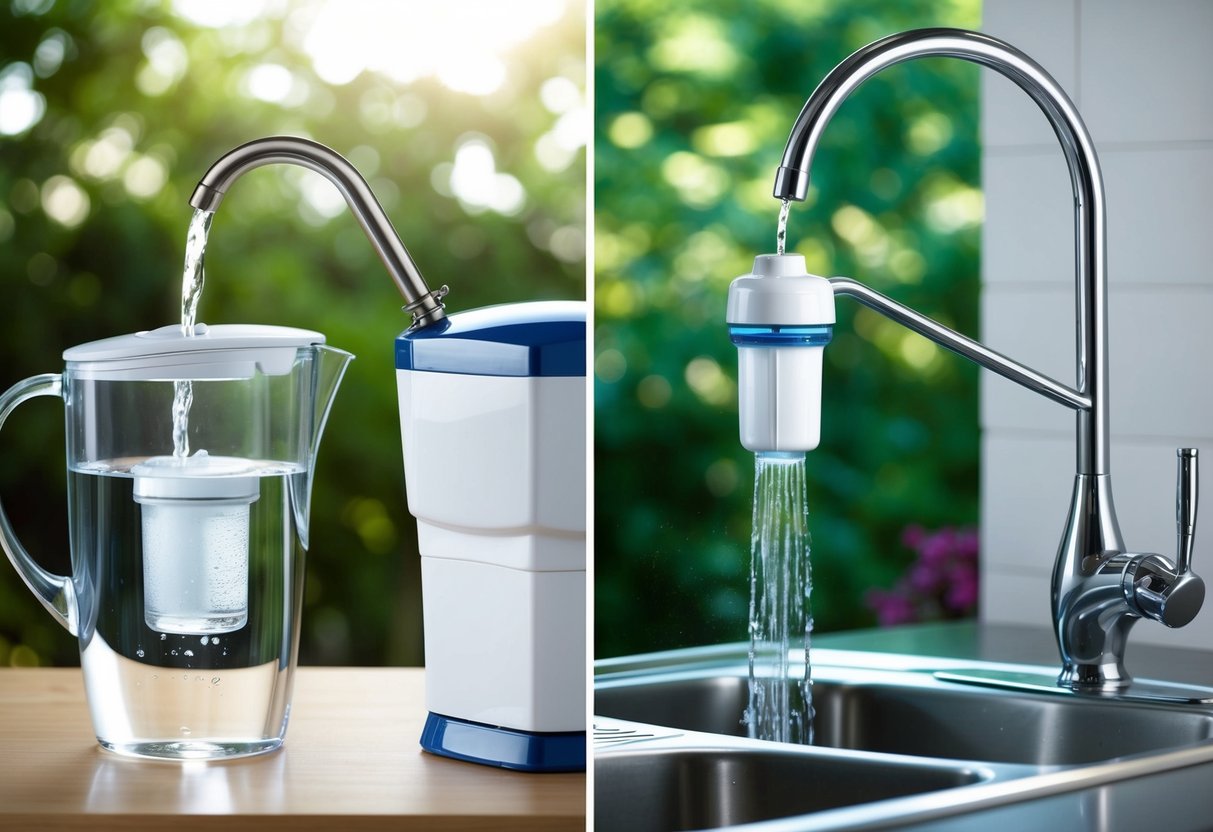
Different types of water filters work in unique ways. Some use activated carbon to absorb pollutants, while others rely on membranes or ceramic materials. The effectiveness of water filters depends on the specific contaminants present and the filtration method used.
Choosing the right water filter requires knowing what’s in your water and which impurities you want to remove. Factors like filter lifespan, flow rate, and cost also matter. Some popular options include pitcher filters, faucet-mounted systems, and under-sink units.
Key Takeaways
- Water filters use various methods to remove contaminants from drinking water
- Filter effectiveness varies based on contaminant types and filtration technology
- Proper filter selection depends on water quality, intended use, and budget considerations
Types of Water Filters and How They Work
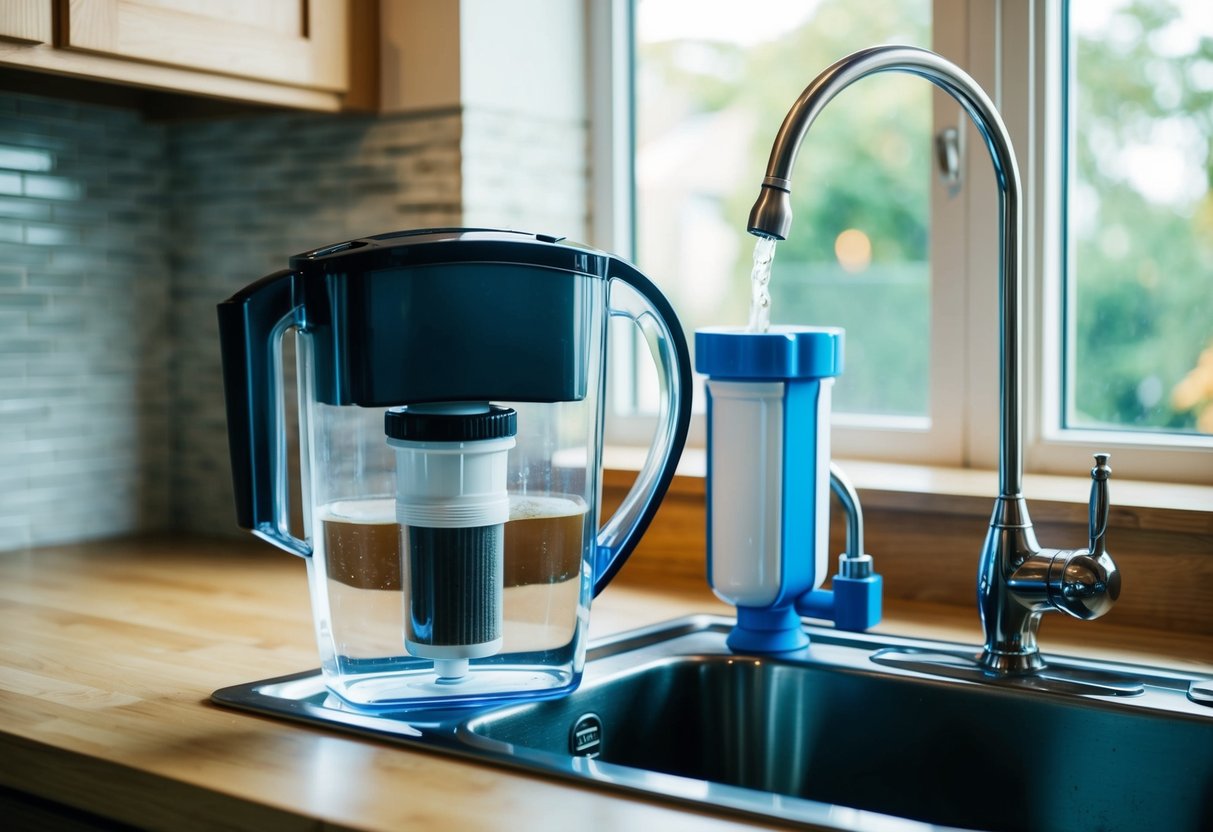
Water filters come in many forms, each designed to tackle specific contaminants. These systems use different methods to clean water, from simple physical barriers to complex chemical processes.
Mechanical Filters
Mechanical filters trap particles as water passes through. They use screens, fibers, or other materials to block contaminants.
Sediment filters are a common type. They remove dirt, sand, and other large particles from water.
Some mechanical filters use ceramic. These have tiny pores that can catch bacteria and protozoa.
Mechanical filters need regular cleaning or replacement. Over time, trapped particles can clog the filter.
Absorption Filters
Absorption filters use materials that attract and hold contaminants. Activated carbon is the most common.
Carbon filters can remove:
- Chlorine
- Bad tastes and odors
- Some organic compounds
These filters work well for improving water taste. They’re often used in pitcher filters and faucet-mounted systems.
Carbon block filters are more effective than loose carbon. They have a denser structure that can trap smaller particles.
Sequestration Filters
Sequestration filters change the chemical form of contaminants. This process makes harmful substances less dangerous.
These filters often target:
- Heavy metals
- Minerals that cause hard water
One example is polyphosphate filters. They coat pipes to prevent scale buildup from hard water.
Sequestration doesn’t remove contaminants. It changes them to make water safer or more pleasant to use.
Ion Exchange Filters
Ion exchange filters swap harmful ions for less harmful ones. They’re often used to soften water.
These filters contain resin beads. The beads attract certain ions and release others.
For example, a water softener trades calcium and magnesium ions for sodium ions. This reduces water hardness.
Ion exchange can also remove:
- Some heavy metals
- Nitrates
- Arsenic
These systems need regular recharging with salt to keep working well.
Reverse Osmosis Systems
Reverse osmosis (RO) forces water through a semipermeable membrane. This membrane blocks most contaminants.
RO can remove:
- Dissolved solids
- Heavy metals
- Bacteria and viruses
These systems are very effective. They can produce nearly pure water.
RO systems waste some water during the filtration process. They also remove beneficial minerals along with contaminants.
UV Purifiers
UV purifiers use ultraviolet light to kill microorganisms. They don’t remove particles or chemicals from water.
These systems are effective against:
- Bacteria
- Viruses
- Some parasites
UV purifiers need clear water to work well. Particles in the water can block the UV light.
They’re often used with other filter types for complete water treatment.
Infrared Filters
Infrared filters use heat and light to treat water. They can soften water and kill some microorganisms.
These filters work by:
- Negatively charging water molecules
- Causing minerals to form clusters
Infrared treatment can make water feel softer. It may also improve taste.
These systems don’t remove contaminants. They’re often used with other filter types.
Alkaline/Water Ionizers
Alkaline filters, also called water ionizers, raise the pH of water. They use electrolysis to separate water into alkaline and acidic streams.
These systems claim to provide health benefits. However, scientific evidence is limited.
Alkaline water can:
- Neutralize acid in the body
- Provide minerals like calcium and potassium
Water ionizers don’t remove contaminants. They’re best used with other filtration methods to ensure clean water.
Effective Contaminant Filtration
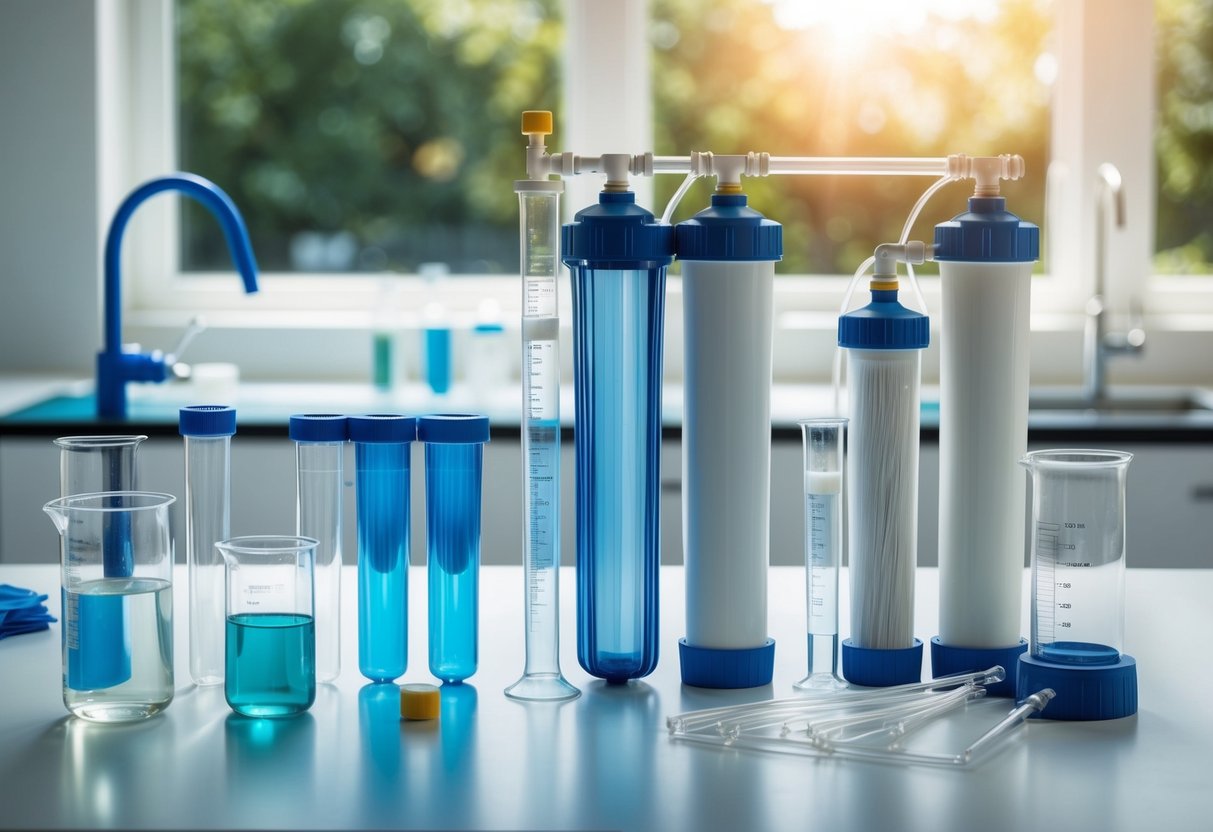
Water filters remove different types of contaminants from drinking water to make it safer and better tasting. The effectiveness varies depending on the filter type and contaminants present.
Removing Microorganisms
Many filters target harmful microorganisms in water. Ceramic filters can effectively remove bacteria and protozoa. Their small pores block passage of these organisms.
Some filters use ultraviolet light to kill viruses, bacteria, and other microbes. This method disrupts the DNA of microorganisms, preventing them from reproducing.
Activated carbon filters trap some bacteria and protozoa. However, they are less effective against viruses due to their small size.
Reverse osmosis systems force water through a semipermeable membrane. This blocks most microorganisms, including viruses.
Chemical and Heavy Metal Reduction
Activated carbon excels at reducing many chemicals. It absorbs chlorine, pesticides, and volatile organic compounds (VOCs).
Nutshell-based carbon filters can remove trace metals from water. These include lead, copper, and mercury.
Reverse osmosis reduces most chemical contaminants. It’s especially effective for inorganic compounds like fluoride and arsenic.
Ion exchange filters swap harmful ions for safer ones. They work well for softening water and removing heavy metals.
Some filters use multiple stages to target different chemicals. This improves overall contaminant reduction.
Addressing Sediments and Turbidity
Sediment filters use different pore sizes to trap particles. Larger pores catch sand and dirt. Smaller pores remove finer sediments.
Ceramic filters excel at clarifying turbid water. Their porous structure traps suspended particles effectively.
Some systems use a series of filters with decreasing pore sizes. This progressively removes sediments of various sizes.
Reverse osmosis membranes block most suspended particles. This results in very clear water.
Regular maintenance is key for sediment filters. Clogged filters lose effectiveness and may reduce water flow.
Eliminating Odors and Improving Taste
Activated carbon is the star player for taste and odor improvement. It absorbs compounds that cause bad tastes and smells.
Chlorine, which often causes unpleasant tastes, is easily removed by carbon filters. This greatly improves water palatability.
Some filters use catalytic carbon. This special carbon is even better at reducing chloramines, which can cause odors.
Reverse osmosis removes dissolved solids that may affect taste. This results in very pure-tasting water.
Mineral filters can add back beneficial minerals. This improves taste while maintaining health benefits.
Considerations for Water Filter Selection
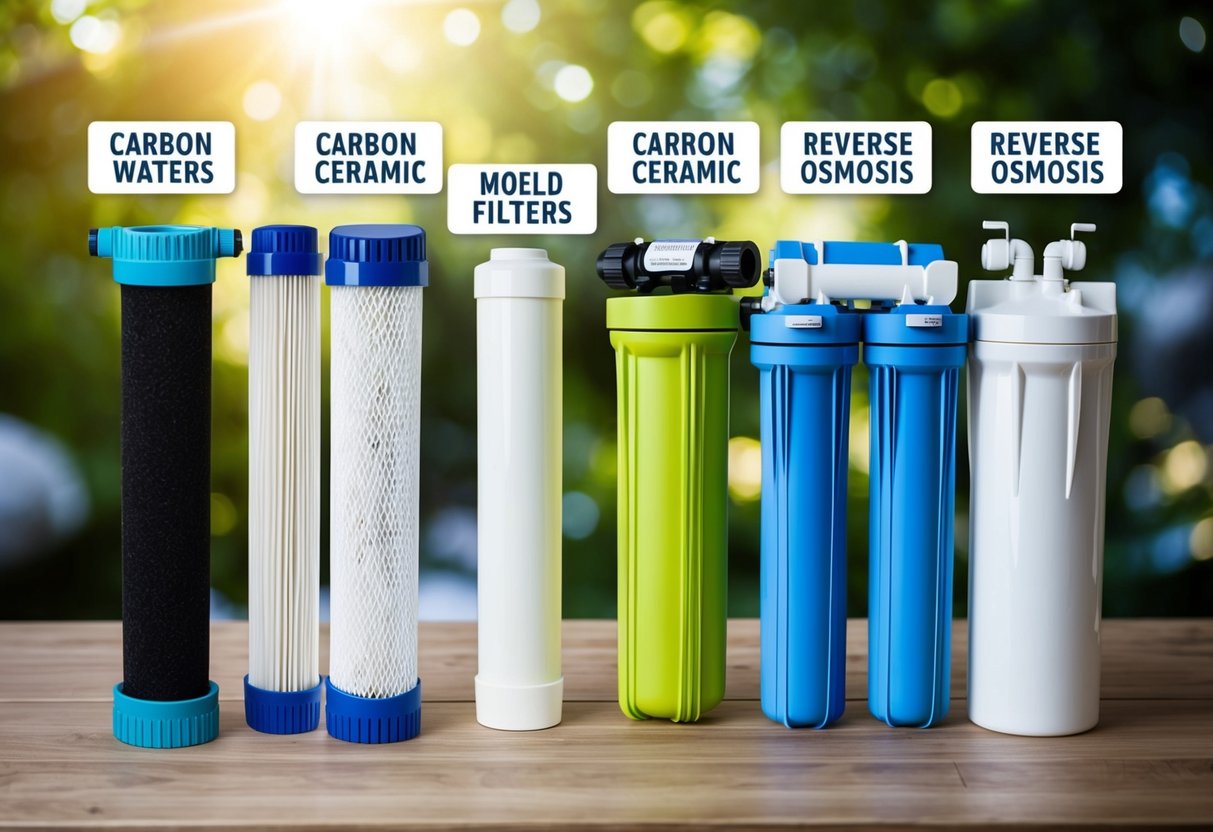
Choosing the right water filter involves assessing your specific needs, water usage, available space, and budget. These factors help determine the most suitable filtration system for your home.
Identifying Specific Water Issues
Different water filters target various contaminants. Test your water to identify problems.
Common issues include:
- Hard water (excess minerals)
- Chlorine taste and odor
- Sediment or particles
- Microorganisms
- Heavy metals
Ceramic filters excel at removing bacteria and parasites. Activated carbon filters reduce chlorine and improve taste.
Reverse osmosis systems tackle a wide range of contaminants but may be overkill for some households.
Choose a filter that addresses your specific water quality concerns for optimal results.
Understanding Water Usage and Flow Rate
Water usage patterns and required flow rate impact filter selection.
Consider:
- Number of people in the household
- Daily water consumption
- Peak usage times
High-capacity filters suit large families or heavy users. Smaller households may prefer compact, lower-flow options.
Flow rate measures water volume filtered per minute. Match the filter’s flow rate to your needs to avoid pressure drops or slow dispensing.
Some filters reduce flow significantly. This can affect activities like showering or filling large pots.
Evaluate your water habits to select a filter that meets your usage demands without compromising performance.
Space and Installation Requirements
Filter size and installation needs vary widely between systems.
Countertop filters are compact but may clutter kitchen space. Under-sink models save counter space but require cabinet modifications.
Whole-house systems need significant space near the main water line. They often require professional installation.
Faucet-mounted filters are easy to install but may not fit all faucet types.
Portable pitchers offer flexibility but have limited capacity.
Measure available space and assess your DIY skills before choosing a filter. Some systems need regular cartridge changes, so ensure easy access for maintenance.
Maintenance and Running Costs
Long-term costs and maintenance requirements differ among filter types.
Factors to consider:
- Filter replacement frequency
- Cartridge costs
- Energy consumption (for powered systems)
- Professional servicing needs
Simple pitcher filters have low upfront costs but need frequent replacements. Reverse osmosis systems last longer but may have higher initial and energy costs.
Ceramic filters offer durability and can be cleaned rather than replaced, reducing long-term expenses.
Calculate the total cost of ownership, including purchase price and ongoing expenses. This helps compare options and choose a filter that fits your budget and maintenance preferences.
Regular maintenance ensures optimal performance and longevity. Factor in the time and effort required for upkeep when selecting a water filtration system.
Popular Water Filter Options for Home Use
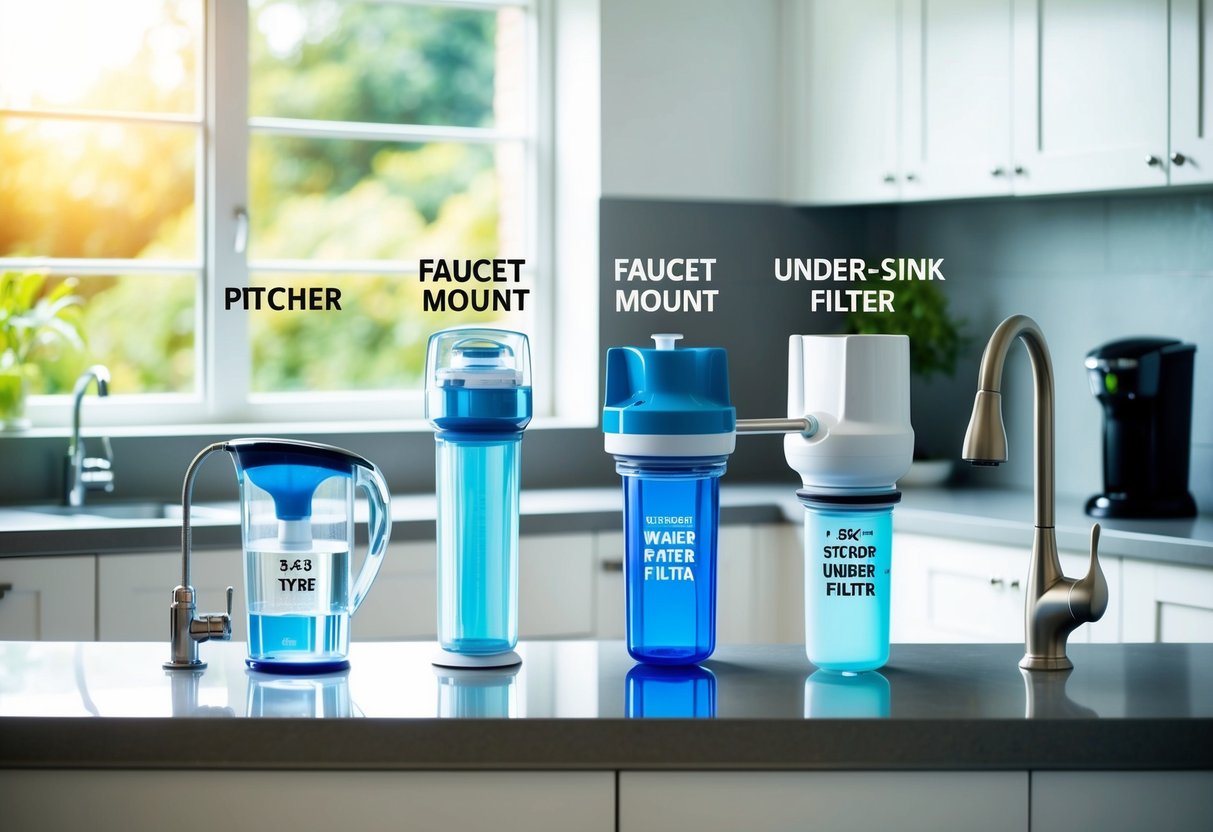
Many people choose to filter their tap water at home. Different types of filters work in various ways to remove contaminants. Some are easy to install while others need more setup.
Countertop and Faucet-Mounted Filters
Countertop filters sit next to the sink and connect to the faucet. They are easy to set up and use. Faucet-mounted filters attach directly to the faucet. Both types are good for small spaces.
These filters often use activated carbon to remove chemicals and improve taste. Some also have ceramic filters to catch tiny particles. Users can switch between filtered and unfiltered water easily.
Pitcher filters are another countertop option. They filter water that is poured into them. The filtered water collects in the bottom part of the pitcher. These are great for keeping cold water in the fridge.
Under Sink Water Filters
Under sink filters fit in the cabinet below the sink. They connect to the cold water line. These filters can handle more water than countertop models.
Many under sink filters use multiple stages of filtration. This can include sediment filters, carbon filters, and sometimes reverse osmosis. They can remove a wide range of contaminants.
Under sink filters often need a separate faucet for filtered water. This keeps the main faucet free for unfiltered water. They need more setup than countertop filters but can filter more water.
Whole House Water Filtration Systems
Whole house filters clean all the water entering a home. They attach to the main water line. This means all taps, showers, and appliances get filtered water.
These systems often use multiple filtration methods. They might have sediment filters, carbon filters, and water softeners. Some use UV light to kill bacteria.
Whole house filters can remove a wide range of contaminants. They protect plumbing and appliances from sediment. But they are more expensive and harder to install than other options.
Portable Water Filters for On-the-Go
Portable filters are great for travel, camping, or emergencies. Water filter bottles are a common type. They have a built-in filter that cleans water as you drink.
Some portable filters use gravity to filter water. Others need you to squeeze or suck the water through the filter. Many use activated carbon or ceramic filters.
Portable filters can remove bacteria and parasites from water. This makes them useful for outdoor activities. But they may not remove all types of contaminants.
Water Filter Performance and Certifications
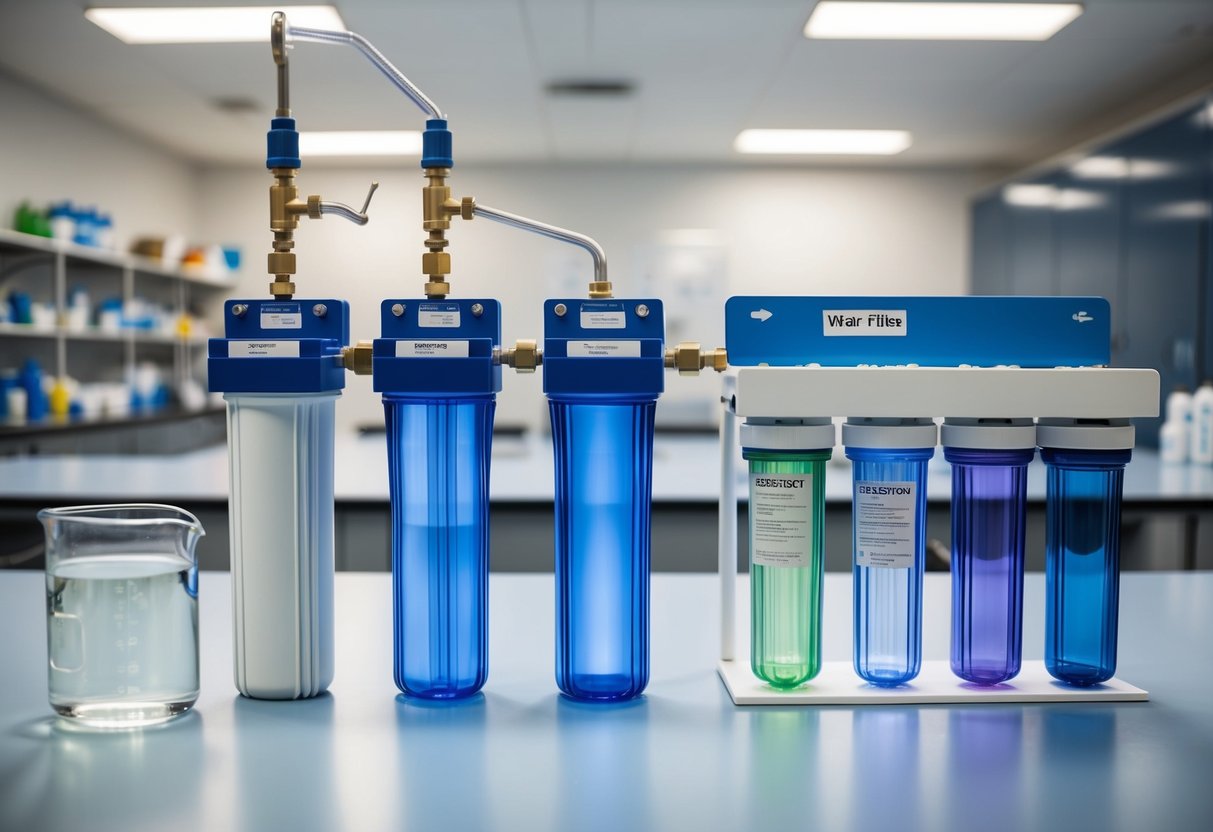
Water filter performance is key to ensuring clean, safe drinking water. Different types of filters remove various contaminants from tap water.
Certification programs test filters to verify their effectiveness. These programs check how well filters remove specific contaminants over their lifespan.
Common certifications include NSF/ANSI standards. These set rules for contaminant removal by different filter types.
Reverse osmosis systems often perform well in removing many contaminants. They can filter out tiny particles, chemicals, and some microorganisms.
Activated carbon filters are good at improving taste and odor. They also remove chlorine and some organic compounds.
Filter performance can vary based on water quality and usage. Regular maintenance and replacement are important for optimal results.
Some key factors in water filter performance include:
- Flow rate
- Contaminant removal efficiency
- Filter lifespan
- Ease of use and maintenance
Consumers should check product labels for certified performance claims. This helps ensure the filter meets their specific needs.
Frequently Asked Questions
Water filtration systems vary widely in their capabilities, costs, and maintenance needs. Different filters remove specific contaminants and affect water quality in distinct ways. Understanding these differences helps consumers choose the best option for their needs.
What are the comparative benefits of reverse osmosis filtration versus other water filter systems?
Reverse osmosis (RO) filters remove a wider range of contaminants than most other systems. They can eliminate up to 99% of dissolved solids, including heavy metals and minerals.
Other systems like carbon filters are more affordable and easier to maintain. They effectively remove chlorine and improve taste but don’t eliminate as many contaminants as RO.
Can you delineate the various contaminants removed by carbon filters versus reverse osmosis filters?
Carbon filters excel at removing chlorine, sediment, and organic compounds. They improve water taste and odor.
RO filters remove these contaminants plus dissolved solids like sodium, calcium, and magnesium. They also filter out bacteria and viruses, making them more comprehensive.
What factors should be considered when selecting a water filter for home use?
Water quality is the primary factor. Test your water to identify specific contaminants.
Budget is important, as filters range from inexpensive pitchers to costly whole-house systems. Consider installation complexity and ongoing maintenance costs.
Filter capacity and flow rate matter for larger households. Some systems may slow water pressure significantly.
How do different water filtration methods affect the mineral content of drinking water?
Carbon filters have minimal impact on mineral content. They mainly target organic compounds and chlorine.
RO systems remove most minerals, resulting in very pure but demineralized water. This can affect taste and potentially reduce beneficial mineral intake.
Ceramic filters, common in developing countries, preserve most minerals while removing bacteria and parasites.
What are the latest advancements in water filtration technology for removing impurities?
Nanotechnology filters use microscopic pores to trap contaminants more effectively than traditional methods. They can remove viruses without chemicals.
UV light purification systems are becoming more compact and energy-efficient. They kill bacteria and viruses without altering water chemistry.
Smart filters with IoT connectivity allow remote monitoring of filter performance and water quality.
How do filtration capacities and maintenance requirements vary among water filter types?
Pitcher filters typically need replacement every 2-3 months and have limited capacity. They’re low-maintenance but require frequent attention.
Under-sink RO systems can process 50-100 gallons per day. They need annual membrane replacement and more frequent pre-filter changes.
Whole-house systems handle high volumes but require professional installation. They often need less frequent maintenance, with some filters lasting several years.