E. coli in drinking water is a serious concern for public health. This bacteria can cause illness if consumed, making it crucial to monitor and control its presence in our water supplies.
E. coli serves as a key indicator of fecal contamination in drinking water, helping to assess overall water quality and safety.
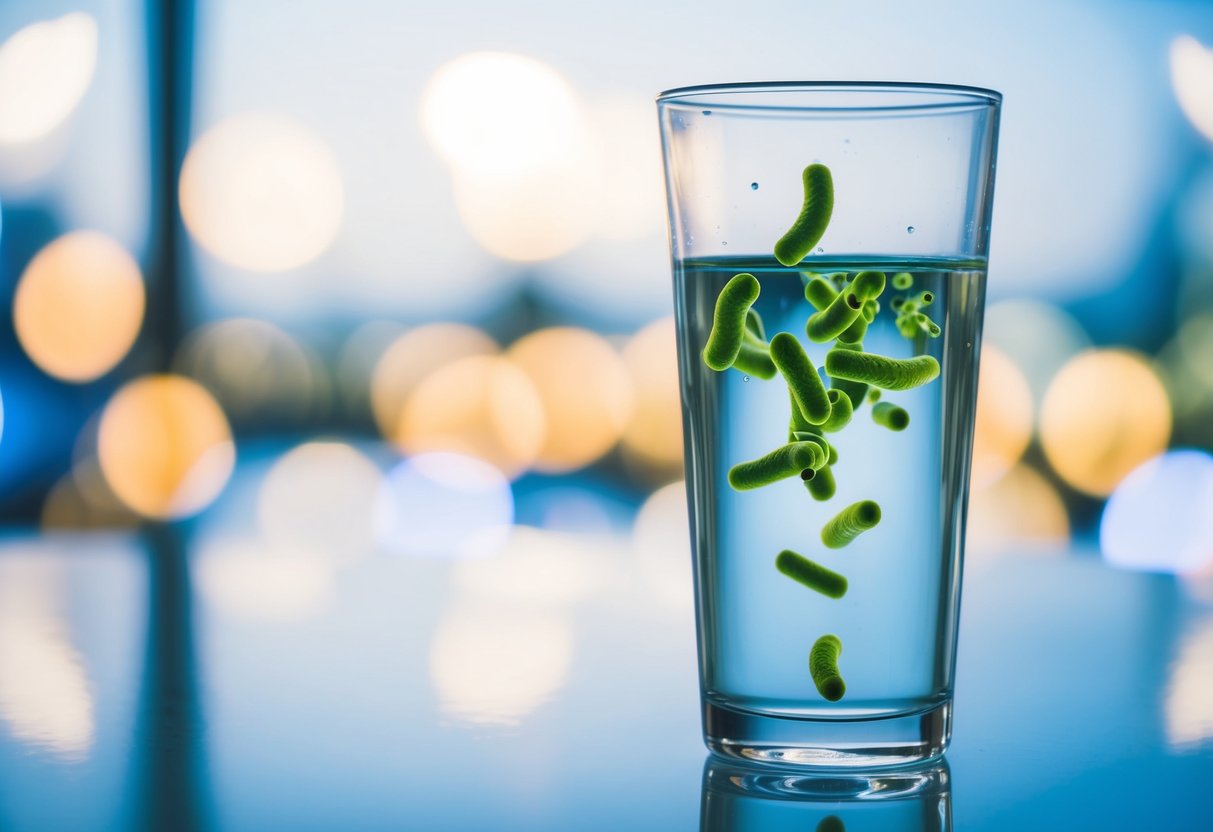
Water treatment facilities use various methods to remove or kill E. coli and other harmful microorganisms. These include filtration, disinfection with chlorine or UV light, and regular testing.
Despite these efforts, E. coli can still sometimes find its way into drinking water through damaged pipes, agricultural runoff, or improper waste management.
Consumers can take steps to protect themselves, such as using water filters or boiling water if contamination is suspected.
It’s important to stay informed about local water quality reports and follow any advisories issued by health authorities.
Key Takeaways
- E. coli in drinking water indicates fecal contamination and potential health risks
- Water treatment facilities use multiple methods to eliminate harmful bacteria
- Regular testing and proper sanitation practices help maintain safe drinking water
Understanding E. coli
E. coli is a key bacterium that plays a crucial role in water quality assessment. It has distinct characteristics and serves as an important indicator organism for potential contamination in drinking water.
Characteristics of E. coli
E. coli, short for Escherichia coli, is a type of bacteria found in the intestines of humans and animals. It is rod-shaped and belongs to the family Enterobacteriaceae.
Most strains of E. coli are harmless, but some can cause illness. E. coli can survive in various environments, including water sources.
The bacterium grows best at body temperature (37°C) but can also thrive in a range of 7-50°C. This adaptability allows it to persist in different water conditions.
E. coli reproduces quickly, with a generation time of about 20 minutes under optimal conditions. This rapid growth makes it easier to detect in water samples.
E. coli as an Indicator Organism
E. coli serves as a reliable indicator of fecal contamination in drinking water. Its presence suggests that other harmful pathogens may also be present.
Water quality experts use E. coli to assess the safety of drinking water. If E. coli is found, it indicates recent fecal pollution and potential health risks.
E. coli is preferred over total coliforms or fecal coliforms as an indicator. It is more specific to fecal contamination and easier to identify in water samples.
Regular testing for E. coli helps water authorities maintain safe drinking water. Its detection triggers further investigation and treatment to ensure water safety.
Sources of E. coli in Water
E. coli can enter drinking water through various pathways. These include contamination of surface water bodies, infiltration into groundwater, and issues with sanitation and water storage practices.
Surface Water Contamination
Surface water sources like rivers, lakes, and streams are vulnerable to E. coli contamination. Runoff from farms and pastures can carry animal feces into water bodies. This introduces E. coli and other harmful bacteria.
Urban areas also pose risks. Sewage overflows during heavy rains can release untreated wastewater into surface waters. This wastewater often contains high levels of E. coli from human feces.
Wildlife contributes to contamination too. Birds, deer, and other animals may defecate near or directly into water sources. Their feces can harbor E. coli that washes into drinking water supplies.
Groundwater Vulnerability
Groundwater can become contaminated with E. coli through several routes. Poorly constructed or maintained wells are a major concern. Cracks in well casings allow surface contaminants to enter the groundwater supply.
Septic systems that are not functioning properly can leak bacteria into surrounding soil. This contaminated water may then seep into underground aquifers.
In areas with shallow water tables, surface contamination can quickly reach groundwater. This is especially problematic in regions with porous soils or fractured bedrock.
Sanitation and Water Storage Issues
Poor sanitation practices often lead to E. coli contamination of water supplies. In areas lacking proper sewage treatment, human waste can easily pollute water sources.
Inadequate water storage methods also contribute to E. coli presence. Uncovered storage tanks allow contaminants to enter. Dirty containers used for water collection and storage can introduce bacteria.
Biofilms that form inside pipes and storage tanks can harbor E. coli. These bacterial communities protect the organisms from disinfection efforts. Regular cleaning and maintenance of water infrastructure is crucial to prevent this issue.
Health Implications
E. coli in drinking water can lead to serious illnesses and health problems. The bacteria can cause both short-term and long-term effects, ranging from mild discomfort to life-threatening conditions.
Diseases Caused by E. coli
E. coli in drinking water can cause several diseases that affect public health. The most common illness is gastroenteritis, which leads to diarrhea, stomach cramps, and vomiting.
In severe cases, E. coli can cause:
- Hemolytic uremic syndrome (HUS)
- Urinary tract infections
- Pneumonia
- Meningitis
HUS is particularly dangerous, especially for young children and the elderly. It can lead to kidney failure and other serious complications.
Short- and Long-Term Health Effects
The health effects of E. coli can vary widely. Short-term effects often appear within 1-8 days of exposure and may include:
- Severe diarrhea (often bloody)
- Abdominal pain
- Fever
- Nausea and vomiting
Long-term health effects can be more serious. Some people may develop chronic health problems, such as:
- Kidney damage
- High blood pressure
- Irritable bowel syndrome
In rare cases, E. coli infections can be fatal, especially for vulnerable populations like young children and the elderly. Proper water treatment and regular testing are crucial to prevent these health risks.
Water Quality Testing
Testing drinking water for E. coli is crucial for public health. Proper methods and result interpretation help ensure water safety.
Testing Methods for E. coli
E. coli testing is a key part of water quality assessment. The most common method is the membrane filtration technique. This involves passing water through a filter to capture bacteria.
After filtration, the filter is placed on a growth medium. The medium contains nutrients and indicators that turn color when E. coli grows. Incubation lasts 24-48 hours.
Another method is the multiple tube fermentation technique. This uses a series of tubes with growth media. The number of positive tubes indicates the bacteria level.
Newer rapid methods include enzyme-based tests. These can detect E. coli in 24 hours or less. They’re useful for quick screening but may need confirmation.
Interpreting Test Results
Water quality standards set limits for E. coli in drinking water. In many countries, no E. coli should be present in 100 mL of water.
Positive test results require immediate action. This may include issuing boil water advisories and investigating the contamination source.
Negative results don’t guarantee safety. They only show E. coli wasn’t detected at that time. Regular testing is needed for ongoing monitoring.
Other factors like total coliforms and turbidity also affect water quality. These should be considered alongside E. coli results for a complete picture.
Interpreting results requires understanding test limitations. False positives and negatives can occur. Proper sampling and handling are crucial for accurate results.
Treatment and Prevention
E. coli in drinking water poses serious health risks. Effective treatment and prevention methods are crucial to ensure safe water for consumption.
Water Treatment Processes
Water treatment is key to removing E. coli from drinking supplies. Common processes include:
- Filtration: Removes bacteria and other particles
- Coagulation: Clumps contaminants for easier removal
- Sedimentation: Allows heavier particles to settle out
Chlorination is a widely used disinfection method. It kills E. coli and other harmful microorganisms.
UV light treatment is another effective option. It damages bacterial DNA, preventing reproduction.
Reverse osmosis can also remove E. coli. This process forces water through a semipermeable membrane, trapping contaminants.
Preventive Measures and Disinfection
Regular testing of water sources helps detect E. coli early. This allows for prompt treatment before contamination spreads.
Proper sanitation practices are essential. These include:
- Maintaining septic systems
- Protecting wells from surface runoff
- Keeping livestock away from water sources
Boiling water is a simple yet effective method to kill E. coli. It should be done for at least one minute.
Using disinfectants like iodine or chlorine tablets can make water safe when other methods aren’t available.
Maintaining clean water distribution systems prevents recontamination after treatment. Regular cleaning and repairs of pipes and storage tanks are important.
Regulations and Guidelines
Drinking water regulations aim to protect public health by setting limits on harmful contaminants. These rules cover testing methods, reporting requirements, and treatment standards for water suppliers.
Global Standards for Safe Drinking Water
The World Health Organization (WHO) provides guidelines for safe drinking water quality. Many countries base their national standards on these recommendations.
The WHO suggests using E. coli as a key indicator of water safety.
In the United States, the Environmental Protection Agency (EPA) sets legal limits called Maximum Contaminant Levels (MCLs) for various substances in drinking water. For E. coli, the MCL is zero, meaning no E. coli should be present in drinking water samples.
The European Union has its own Drinking Water Directive. This sets standards for member countries to follow.
Like the US, the EU requires the absence of E. coli in drinking water.
Monitoring and Compliance
Water suppliers must regularly test their water for E. coli and other contaminants. The frequency of testing depends on the size of the population served and local regulations.
If E. coli is found, suppliers must:
- Notify authorities immediately
- Issue a boil water advisory to customers
- Investigate the source of contamination
- Take corrective actions
Failure to meet standards can result in fines or legal action.
Public water systems must also provide annual water quality reports to customers, detailing test results and any violations.
Many countries are working to improve their water testing methods. New technologies aim to detect E. coli faster and more accurately. This helps protect public health by allowing quicker responses to contamination events.
Risk Management and Water Safety
Keeping drinking water safe requires careful planning and quick action. Good systems can stop problems before they start and deal with emergencies fast.
Developing Water Safety Plans
Water Safety Plans are key tools for managing risks in drinking water. These plans look at the whole water system from source to tap. They find possible dangers and set up barriers to stop them.
Water suppliers work with health departments to make these plans. They check water sources, treatment methods, and pipes.
The plans also include regular testing schedules.
A good plan has clear steps for fixing problems. It sets rules for water quality and safety checks. Training staff is a big part of making sure the plan works well.
Emergency Response and Public Notifications
Fast action is crucial when water gets unsafe. Water suppliers must have clear steps for emergencies. This includes how to tell people quickly if there’s a problem.
Public health officials play a big role in these situations. They work with water companies to decide when to warn people. They also help figure out how long warnings should last.
Warnings can be sent through many channels:
- TV and radio
- Phone alerts
- Social media posts
Clear messages are key. They should tell people what to do, like boil water or use bottled water. Updates must be given often until the water is safe again.
Frequently Asked Questions
E. coli in drinking water poses serious health risks. Proper treatment, testing, and swift action are crucial for ensuring safe water supplies.
How can E. coli be removed from water?
E. coli can be eliminated from water through several methods. Boiling water for at least one minute is an effective way to kill E. coli bacteria.
Chlorination is another common method used by water treatment plants. UV light treatment and ozonation are also effective in destroying E. coli.
Home water filters with reverse osmosis or nanofiltration can remove E. coli, but not all filters are equally effective.
What are the regulatory limits for E. coli presence in drinking water?
The regulatory limit for E. coli in drinking water is zero. Any detectable amount of E. coli in a water sample is considered unsafe.
This zero-tolerance policy is set by health authorities worldwide to protect public health. Water suppliers must regularly test for E. coli to ensure compliance.
What are the common sources of E. coli contamination in water systems?
E. coli contamination often originates from fecal matter. Sewage leaks or overflows can introduce E. coli into water sources.
Agricultural runoff from livestock farms is another common source. Wildlife near water sources can also contribute to contamination.
Improperly maintained septic systems or faulty water treatment processes can lead to E. coli presence in drinking water.
What symptoms might manifest after consuming water contaminated with E. coli?
Symptoms of E. coli infection typically appear 3-4 days after exposure. Common symptoms include severe stomach cramps and diarrhea, often bloody.
Vomiting may occur in some cases. Mild fever (less than 101°F) is also possible.
Most people recover within 5-7 days. However, some infections can be severe or life-threatening, especially in young children and older adults.
How do you test for E. coli contamination in water?
E. coli testing involves collecting water samples and analyzing them in a laboratory. The most common method is the membrane filtration technique.
This process filters water through a special membrane that captures bacteria. The membrane is then placed on a growth medium and incubated.
After incubation, colonies of E. coli can be counted if present. Home test kits are available but may be less reliable than professional lab testing.
What steps should be taken if E. coli is detected in water supply?
If E. coli is detected, immediate action is necessary. The public should be notified promptly about the contamination and advised to boil water or use bottled water.
The water supplier must investigate the source of contamination and take corrective actions. This may include flushing the system, increasing disinfectant levels, or repairing infrastructure.
Ongoing testing should be conducted until the water is confirmed safe. Only when multiple consecutive tests show no E. coli should the water be declared safe for consumption.