Arsenic in drinking water is a serious health concern affecting millions worldwide. This toxic element occurs naturally in soil and rocks, but human activities like mining and pesticide use can increase its presence in water sources.
When consumed over time, even low levels of arsenic can lead to severe health problems.
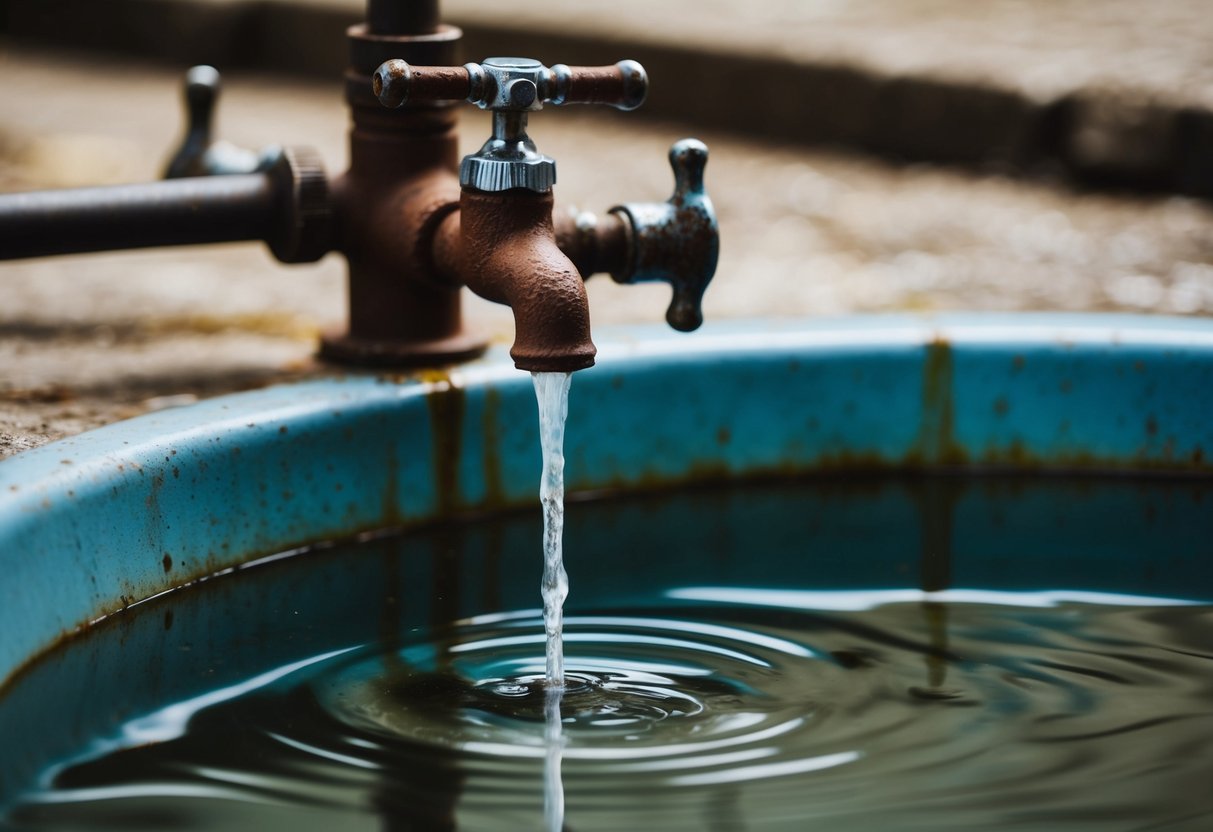
Exposure to arsenic through drinking water can cause skin lesions, cancer, and damage to the cardiovascular and nervous systems. The risks are especially high in areas with naturally high arsenic levels in groundwater or where industrial pollution is common.
Many people may not realize their water contains unsafe arsenic levels, as it is colorless, odorless, and tasteless.
Efforts to address this issue involve setting strict water quality standards, testing water sources regularly, and implementing effective treatment methods.
Public awareness is crucial in prompting action from water suppliers and government agencies to ensure safe drinking water for all.
Key Takeaways
- Arsenic in drinking water poses serious health risks to millions globally
- Regular testing and treatment of water sources are essential for public safety
- Raising awareness can lead to improved water quality standards and practices
The Nature of Arsenic
Arsenic is a toxic element found in nature. It comes in different forms and can enter drinking water from various sources. Understanding arsenic’s chemical makeup and origins helps explain its impact on water quality.
Chemical Profile of Arsenic
Arsenic is a metalloid with atomic number 33. It sits in group 15 of the periodic table. At room temperature, arsenic is a solid.
Arsenic forms compounds easily. It can bond with many other elements. This ability makes arsenic widespread in nature.
Common arsenic compounds include:
- Arsenic trioxide (As2O3)
- Arsenic pentoxide (As2O5)
- Sodium arsenite (NaAsO2)
These compounds have different levels of toxicity. Some are more harmful than others when found in drinking water.
Inorganic vs Organic Arsenic
Arsenic exists in two main forms: inorganic and organic.
Inorganic arsenic is usually more toxic. It’s the type most often found in drinking water. Examples include arsenite and arsenate.
Organic arsenic contains carbon. It’s less harmful to humans. Examples include:
- Arsenobetaine
- Arsenocholine
Fish and shellfish often contain organic arsenic. The body can process this form more easily.
In water, inorganic arsenic is the main concern. It poses greater health risks when consumed over time.
Sources of Arsenic in the Environment
Arsenic enters the environment through natural and human activities.
Natural sources:
- Volcanic eruptions
- Erosion of arsenic-rich rocks
- Geothermal waters
Human sources:
- Mining operations
- Pesticide use
- Wood preservatives
- Industrial processes
In many areas, arsenic in drinking water comes from natural geological sources. Groundwater can pick up arsenic as it flows through arsenic-rich rocks and soils.
Climate and soil conditions affect how much arsenic ends up in water. Dry areas with certain rock types often have higher arsenic levels in groundwater.
Arsenic in Drinking Water
Arsenic in drinking water is a serious health concern affecting millions worldwide. It occurs naturally in groundwater and can also result from industrial pollution.
Global Prevalence of Arsenic in Groundwater
Arsenic contamination of groundwater is a global issue. Many countries face high arsenic levels in their water supplies. Bangladesh and India’s West Bengal region are severely affected.
In these areas, arsenic concentrations often exceed 50 μg/L. This is five times the World Health Organization’s guideline of 10 μg/L.
Other countries with significant arsenic problems include:
- China
- Vietnam
- Thailand
- Nepal
- Argentina
- Chile
- Mexico
- United States
Arsenic enters groundwater through natural processes. It can dissolve from certain rock formations. Human activities like mining can also release arsenic into water sources.
Arsenic Contamination Hotspots
Some regions have very high levels of arsenic in their water. These are known as contamination hotspots.
The Ganges-Brahmaputra Delta is a major hotspot. It covers parts of Bangladesh and India. Here, millions of people drink water with dangerous arsenic levels.
In the United States, the western states have more arsenic issues. This is due to their geology. States like Nevada, Utah, and Arizona often have higher arsenic concentrations in groundwater.
Argentina’s Chaco-Pampean Plain is another notable hotspot. Some wells in this region have arsenic levels over 1000 μg/L.
Private Well versus Public Water System Contamination
Arsenic can affect both private wells and public water systems. But the risks and regulations differ.
Public water systems in many countries must test for arsenic. They have to meet safety standards. In the U.S., the limit is 10 μg/L.
Private wells don’t have these rules. Well owners must test their own water. Many don’t know about arsenic risks.
Studies show private wells often have higher arsenic levels. This is because they’re not treated like public water.
In areas with high arsenic, both well users and public systems face challenges. But well users might be at greater risk due to lack of testing and treatment.
Health Impacts
Arsenic in drinking water can cause severe health problems. Long-term exposure leads to various cancers and other serious conditions. Even short-term exposure can result in acute poisoning symptoms.
Acute and Chronic Arsenic Poisoning
Acute arsenic poisoning happens from drinking water with very high arsenic levels. It can cause stomach pain, vomiting, and diarrhea. In severe cases, it may lead to shock and death.
Chronic arsenic poisoning occurs from drinking lower levels of arsenic over many years. This is more common and can cause many health issues.
Skin lesions and changes in skin color are often early signs.
Other symptoms include weakness, numbness in hands and feet, and problems with memory and thinking. Chronic arsenic exposure can also harm the liver, kidneys, and lungs.
Arsenic as a Carcinogen
Arsenic is a known cancer-causing agent. Drinking water with arsenic raises the risk of several types of cancer.
Skin cancer is strongly linked to arsenic exposure. This includes both non-melanoma and melanoma skin cancers.
Arsenic also increases the risk of internal cancers. Bladder and lung cancer risks are higher in people who drink arsenic-contaminated water. Studies have also found links to liver, kidney, and prostate cancers.
The cancer risk from arsenic depends on how much and how long a person is exposed. Even low levels of arsenic can increase cancer risk over many years.
Non-Carcinogenic Health Risks
Arsenic affects many body systems beyond cancer. It can cause or worsen several other health problems.
Cardiovascular disease is a major concern. Arsenic exposure is linked to high blood pressure and heart disease.
Arsenic may also increase the risk of diabetes. Some studies have found higher rates of diabetes in areas with arsenic in drinking water.
Long-term arsenic exposure can affect brain function. It may cause memory problems and reduced intelligence in children.
Arsenic can harm unborn babies. It’s linked to low birth weight, infant deaths, and problems with child development.
Regulatory Standards and Guidelines
Governments and health organizations have set rules for arsenic in drinking water. These rules aim to keep people safe from arsenic’s harmful effects.
EPA Standard for Arsenic in Drinking Water
The U.S. Environmental Protection Agency (EPA) sets the maximum contaminant level (MCL) for arsenic in public water systems. This level is 10 parts per billion (ppb).
The EPA lowered this standard from 50 ppb to 10 ppb in 2001. This change took effect in 2006. The agency made this decision based on new research about arsenic’s health risks.
Water suppliers must test for arsenic and treat water if levels are too high. They also have to tell customers about arsenic levels in their water.
WHO Provisional Guidelines
The World Health Organization (WHO) also gives advice on arsenic in drinking water. Their provisional guideline value is 10 ppb, the same as the EPA’s standard.
WHO calls this a “provisional” guideline because of uncertainty about arsenic’s effects at low levels. They also consider how hard it can be to remove arsenic from water.
Many countries use WHO’s guidelines to set their own rules. But some countries have different standards based on local conditions and resources.
Risk Assessment and Safe Levels
Scientists study how arsenic affects health to decide on safe levels. They look at both short-term and long-term effects.
High levels of arsenic can cause immediate health problems. But even low levels over a long time can raise cancer risk.
Experts debate what level of arsenic is truly safe. Some think even 10 ppb might be too high. But lowering the limit further would be very expensive for water systems.
Risk assessments try to balance health protection with practical concerns. They consider things like:
- How toxic arsenic is
- How much water people drink
- The cost of removing arsenic
- Other sources of arsenic exposure
These assessments help regulators set standards that protect public health.
Mitigation and Treatment
Arsenic contamination in drinking water poses serious health risks. Effective mitigation and treatment methods are crucial for providing safe water to affected communities.
Remediation of Arsenic-contaminated Water
Arsenic removal from water involves several techniques. Adsorption using iron-based materials is a common method. This process uses iron oxides to bind arsenic, removing it from water.
Reverse osmosis is another effective approach. It forces water through a membrane, filtering out arsenic and other contaminants. Ion exchange resins can also be used to swap arsenic ions for harmless ones.
Phytoremediation uses plants to absorb arsenic from soil and water. This eco-friendly method is gaining popularity in some areas.
Water Treatment Technologies
Advanced oxidation processes break down arsenic compounds in water. These methods use powerful oxidants like ozone or UV light to change arsenic’s chemical form, making it easier to remove.
Coagulation-filtration is widely used in large-scale water treatment plants. It involves adding chemicals to make arsenic particles clump together for easier filtering.
Membrane filtration technologies like nanofiltration and ultrafiltration are becoming more common. These methods can remove very small arsenic particles from water.
- Oxidation
- Coagulation-filtration
- Membrane filtration
- Ion exchange
- Adsorption
Preventative Strategies
Testing water sources regularly is key to preventing arsenic exposure. This helps identify contamination early.
Switching to alternative water sources is often the simplest solution. Deep wells or surface water may have lower arsenic levels than shallow wells.
Public education about arsenic risks is vital. Communities need to understand the importance of water testing and treatment.
Implementing stricter regulations on arsenic levels in drinking water can drive more widespread testing and treatment. Many countries are lowering their acceptable arsenic limits in response to health concerns.
Current Research and Epidemiological Studies
Recent studies focus on the effects of arsenic in drinking water. Scientists are looking at how it impacts health over time.
Epidemiological studies track large groups of people exposed to arsenic. These help show links between arsenic and health problems.
Research points to arsenic as a carcinogen. This means it can cause cancer. Studies link it to skin, lung, and bladder cancers.
Other health risks from arsenic include:
- Heart disease
- Diabetes
- Skin lesions
- Developmental issues
The U.S. Environmental Protection Agency (EPA) is looking at tighter rules for arsenic levels. They want to better protect public health.
Current research aims to find the safest arsenic levels in water. Scientists are studying how different amounts affect people over time.
New testing methods can detect very low arsenic levels. This helps researchers get more precise data.
Some studies focus on ways to remove arsenic from water. Others look at how arsenic moves through the environment.
Researchers also study why some people seem more affected by arsenic than others. This may be due to genetics or diet.
Looking Ahead

The future of arsenic in drinking water involves advancing research, improving policies, and educating the public. These efforts aim to reduce exposure and protect health.
Future Directions in Research
Scientists are working on new ways to remove arsenic from water. They’re testing materials like iron-based compounds and special filters. These methods could be cheaper and more effective than current ones.
Researchers are also studying how arsenic affects health over long periods. This includes looking at low-level exposure and its impact on different groups of people.
Another area of focus is mapping arsenic in groundwater. Better maps will help identify high-risk areas and guide water treatment efforts.
Policy and Infrastructure Development
The Environmental Protection Agency (EPA) may update arsenic standards for drinking water. This could lead to stricter limits and more testing.
Governments are planning to upgrade water treatment plants. This includes adding new technologies to remove arsenic more effectively.
Many areas are considering connecting rural communities to larger water systems. This would give more people access to treated water.
Policymakers are also looking at ways to fund these improvements. This might include grants, loans, or public-private partnerships.
Public Health Education and Awareness
Health departments are creating new programs to teach people about arsenic risks. These programs will explain how to test well water and what the results mean.
Schools are adding lessons about water quality to their science classes. This helps children understand the importance of safe drinking water.
Public health officials are working on better ways to share information. This includes using social media and mobile apps to reach more people.
Community groups are organizing workshops to teach people how to use water filters at home. These hands-on sessions can help reduce arsenic exposure.
Frequently Asked Questions
Arsenic in drinking water raises important health concerns. People want to know about testing, safety standards, health effects, and treatment options.
How can you determine if your drinking water contains a dangerous level of arsenic?
Water utilities test for arsenic regularly in public water systems. For private wells, homeowners can use test kits or send samples to certified labs.
Local health departments often provide arsenic testing services. Results typically take 1-2 weeks.
What are the regulatory safety standards for arsenic concentrations in potable water?
The U.S. Environmental Protection Agency set the arsenic standard for drinking water at 10 parts per billion (ppb). This rule went into effect in 2006.
Some states have stricter limits. New Jersey, for example, uses a standard of 5 ppb.
Can you identify the symptoms resulting from exposure to arsenic via drinking water?
Long-term arsenic exposure can cause skin changes, including darkening and thickening. Other symptoms may include stomach pain, nausea, and diarrhea.
More serious effects include increased cancer risk, especially of the skin, bladder, and lungs. Arsenic can also affect the cardiovascular and nervous systems.
What are the differences in arsenic levels in water across various states?
Arsenic levels vary widely across the U.S. Some areas, like parts of the Southwest and New England, have naturally higher levels.
In Maine, for example, arsenic occurs frequently in groundwater. Other states with notable arsenic issues include Michigan, New Hampshire, and parts of California.
Are there effective methods for removing arsenic from residential well water?
Yes, several methods can remove arsenic from well water. Reverse osmosis is highly effective, removing up to 99% of arsenic.
Ion exchange systems also work well. These methods replace arsenic ions with harmless ones.
What options are available for filtering arsenic out of household water supplies?
Point-of-use filters can remove arsenic at specific taps. These include under-sink reverse osmosis systems and specialized arsenic filters.
Whole-house treatment options exist too. These treat all water entering the home, providing arsenic-free water from every tap.